 All destinations
Southern Circuit / National Park
Amboseli National Park
Kajiado County, Kenya
- Area
- 392 km²
The place
Witness the soul of Africa: vast elephant herds roam beneath the snow-capped majesty of Kilimanjaro. Here, every sunrise paints a breathtaking canvas, stirring the heart with raw, untamed beauty. Capture moments that echo with the wild’s timeless spirit—a photographer’s dream, a traveler’s treasure.
The air in Amboseli is thick with the scent of dust and wild sage, carried on a warm, dry breeze that whispers across the savanna. Before you, the land unfolds in shades of gold and olive, dotted with thorny acacias and the patient, slow-moving shapes of elephants. Their low, rumbling calls vibrate through the earth, a language older than memory. In the immense distance, Mount Kilimanjaro’s snow-capped peak floats like a mirage, its glacial runoff feeding the marshes that sustain this entire ecosystem.
Here, time seems to slow to the rhythm of animal footsteps. A herd of zebras drinks cautiously at a waterhole, their stripes shimmering in the heat haze, while a watchful lioness dozes in the dappled shade. The story of Amboseli is written in these interactions—the delicate balance between thirst and predation, dust and life. As the sun begins its descent, painting the sky in fiery strokes of orange and purple, the mountain glows with a soft, alpenglow light. It’s a moment of profound stillness, where you are not just a visitor, but a witness to an ancient, enduring world.
Known for
- 01Elephant herds
- 02Mount Kilimanjaro views
- 03Photography
- 04Maasai culture
- 05Birdwatching
Who you'll meet
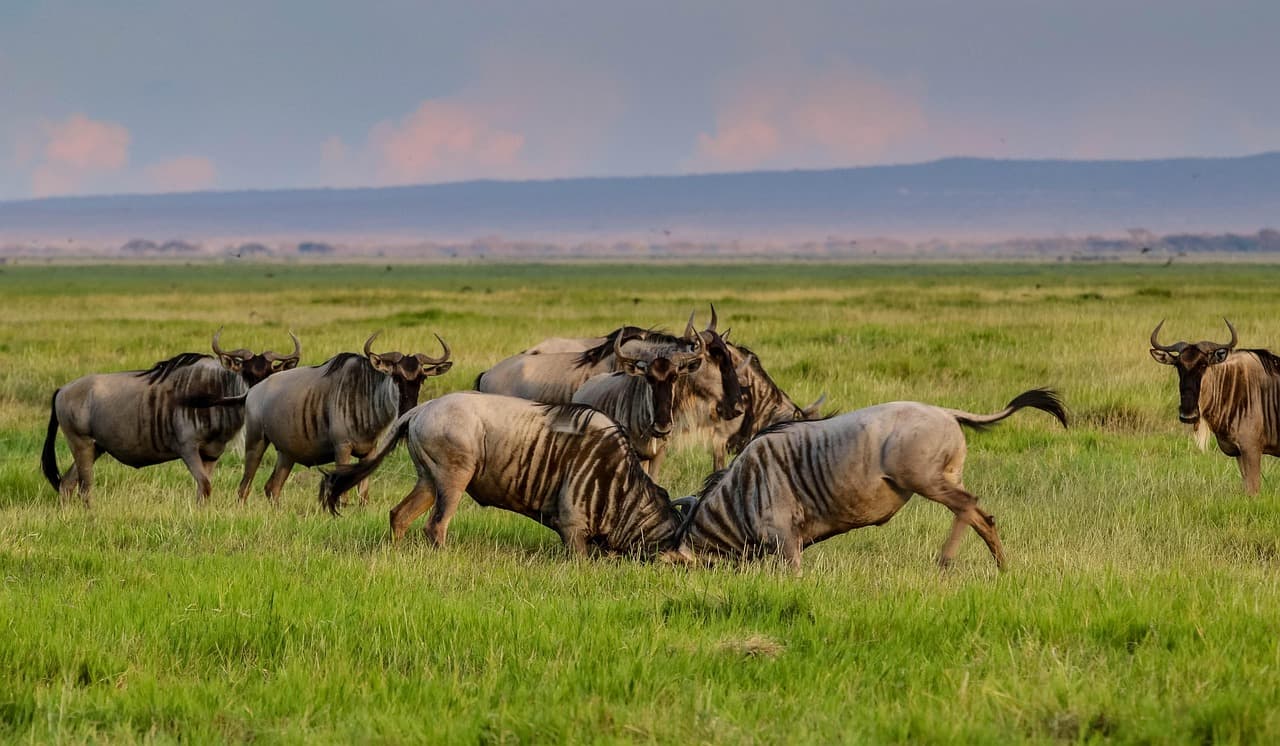
African Elephants Masai Lions Cheetahs Leopards Cape Buffalo Common Hippos Masai Giraffes Plains Zebras Blue Wildebeest Grant's Gazelles Thomson's Gazelles Impalas Common Waterbucks Gerenuk Lesser Kudus Common Warthogs Olive Baboons Vervet Monkeys Black-backed Jackals Spotted Hyenas Caracals African Wild Cats Bat-eared Foxes African Civet
What to do there
Highlights
- Largest Free-ranging Elephant Herds
- Mount Kilimanjaro Views
- Diverse Birdlife - 400+ Species
- Elephant Research Center
- Maasai Cultural Heritage
- Observation Hill Panoramic Views
- Swamp Ecosystems
- Photography Paradise
Ways to explore
- Elephant Watching
- Mount Kilimanjaro Photography
- Game Drives
- Bird Watching
- Maasai Cultural Experiences
- Nature Walks
- Bush Breakfast
- Sundowner Drinks
- Photography Workshops
- Conservation Education Tours
- Swamp Excursions
- Night Game Drives
- Community Tourism
- Research Station Visits
When to go
Our recommended months
Amboseli experiences a semi-arid climate with two rainy seasons. Long rains occur from March to May, while short rains fall between October and December. The dry seasons (June-September and January-February) offer excellent wildlife viewing with average temperatures of 20-27°C. Mount Kilimanjaro is most visible during early mornings and late afternoons when clouds typically clear.
Staying & getting there
Where you'll stay
- Luxury Safari Lodges
- Tented Safari Camps
- Eco-Lodges
- Budget Campsites
- Cultural Lodges
- Mobile Camping
Getting there
Amboseli National Park is located 240 kilometers southeast of Nairobi, accessible via a well-maintained tarmac road through Namanga border town. The journey takes approximately 4 hours by road. Scheduled flights operate from Nairobi's Wilson Airport to Amboseli Airport, with a flight time of 45 minutes. Charter flights provide direct access to lodge airstrips within the ecosystem.
Before you go
- 1.Maintain safe distance from elephants - minimum 25 meters
- 2.No off-road driving to protect fragile ecosystems
- 3.Respect wildlife corridors and migration routes
- 4.Support local Maasai communities through ethical tourism
- 5.No feeding wildlife
- 6.Carry out all litter
- 7.Follow park speed limits
- 8.Observe quiet hours in camps
Amboseli National Park, planned around you.
Tell us when you'd like to travel and how you like to explore. We'll shape a private itinerary and reply within 24 hours.
Start planning